Showing posts with label Search. Show all posts

Monday, November 7, 2011

blinkx Powers Video Search and Discovery with Targeted Ads, Acquisitions and New Video Channels

Earlier this year at OTTcon, I caught up with Suranga Chandratillake, CEO and Founder of blinkx, which describes as "the world's largest and most advanced video search engine." Chandratillake founded blinkx in 2004 and has helped pioneer video search on the Internet. Unlike other search engines that focus on text web, titles and metadata, blinkx uses a unique combination of patented conceptual search, speech recognition and visual analysis to find and qualify online video. The company has an index of over 35 million hours of searchable video and more than 720 media partnerships, including national broadcasters, commercial media giants, and private video libraries.


Chandratillake says blinkx has positioned itself as a premier destination for online video.
"When you come to blinkx.com, and search for any topic you're interested in right now, we can find videos for you that match that topic, that are highly relevant to that topic of interest and we bring those back to you. So you can click on them and watch them, and that's our core business. But we also power video search behind the scenes for other people too." 
In particular, if you go to Ask.com, blinkx powers the video search experience for that site, which in turn helps power blinkx's ad business with its tens of millions of unique views each month that it sells advertising against.
"One of the really nice things about the advertising is that we use our search technology to try and target the ads. So if you're watching a video about a particular topic, you will likely see ads that are highly relevant to that video."
From a user perspective, Chandratillake says, that's great because you're not getting irrelevant ads that waste your time.
"It's also great from an advertiser's perspective because it means you're being able to engage people or consumers who may actually care about your product."
In April of 2011, blinkx acquired online video media company Burst Media for $30 million in stock and cash in a move to integrate its premium video content with Burst’s 150 million monthly uniques 35 billion page views (according to comScore Media Metrix, September 2011). Just last week, Burst Media introduced 12 new Internet video channels premium video from a host of blinkx's direct play partners, including Reuters, Howcast, CelebTV, GeoBeats and TVGuide, offering TV-style programming on a wide range of subjects, from food to fashion, celebrity gossip to gardening, health to How To.

blinkx also also made two strategic partnership announcements last week, that it is powering video for Aurasma, and it is partnering with Orb Networks to bring its vast video catalog to Orb BR and Orb TV Users. Aurasma is the world's first visual browser for smartphones and tablets that recognizes physical objects and delivers related online content - videos, animations, audio or web pages - in real time.

Orb TV is a hockey puck-sized OTT device that plugs into any TV, enables consumers to stream online video, photos and music to a TV. In addition to blinkx content, Orb TV provides consumers with easy access to services such as Netflix, Amazon Video on Demand, Hulu and Comedy Central. Orb BR is a software solution that leverages the power of PS3s and connected Blu-ray players to bring users the same content as Orb TV - without any additional hardware purchase. With the announcement, Orb BR brings blinkx content to the millions of PS3s and connected Blu-ray players in the market.

Chandratillake noted that the the online video and OTT space has come of age after so many years of video on the Internet. What's different, he says, is the momentum at which the idea is gaining. The reason for that is because the reality of that connected television universe is just getting ever close. More and more of us are watching Internet video on our television sets or contemplating the purchase of a set-top box or game system to watch OTT video.
"From a blinkx perspective, we look at the TV as the screen or one of the screens of the future. Today, the vast majority of our business, and most our audience is accessing our system through a computer screen. But in the future, I don't know if it's either two years or five years, I think a lot of people will actually access it straight through a television screen. So we've got be there and offer a very relevant service, but it's very important that we make the right partnerships to make sure our services are available though all these different devices."
Just as OTT video is gaining speed, so is social video, with video discovery and recommendation becoming more relevant than video search, which almost seems antiquated in comparison.
"Search and discovery are two sides of the coin," Chandratillake noted. "So on the one hands they never see each other , or on the other hand they're on the same coin. It's one of these classic cases where things can be so closely inter-related, yet so far apart. But its all down to the nature of what the user or consumer is doing at a given point in time."
Search is more of a lean-in experience, where you're doing investigative work finding specific information in a search engine like Google, Yahoo or Bing. You tend to add, subtract and play around with words to find the right combination to get the best search results. That, of course, is also the case with online video search.

But there are many other cases on television when actually it's about relaxation. It's about leaning back. It's about turning the box on and leaning back on the sofa and having entertainment come to you. Whether that piece of video is recommended to you by a friend or from personalized recommendations like blinkx's system.
"That's where discovery comes in," says Chandratillake,  "discovery is about knowing enough about you, and knowing enough about the content to figure out what you want to watch right now."
About blinkx
blinkx plc (lse aim:BLNX) is the world's largest and most advanced video search engine. Today, blinkx has indexed more than 35 million hours of audio, video, viral and TV content, and made it fully searchable and available on demand. blinkx's founders set out to solve a significant challenge - the growing amount of TV and user-generated content on the Web means keyword-based search technologies only scratch the surface. blinkx's patented search technologies listen to--and even see--video on the Web, helping users enjoy a breadth and accuracy of search results not available elsewhere. In addition, blinkx powers the video search for many of the world's most frequented sites. blinkx is based in San Francisco and London. More information is available at www.blinkx.com.

Tuesday, September 27, 2011

Video is the Swiss Army Knife Of Internet Marketing - Mark Robertson, ReelSEO.com


According to ReelSEO.com's Mark Robertson, online video is the swiss army knife of online marketing, and social video can help eCommerce retailers move from conversions to conversations with their customers. I sat down with Mark following his keynote, "Welcome to the ‘REEL’ Web: Why Video Marketing has Evolved Beyond SEO" at Liveclicker’s 2011 Video Commerce Summit in San Francisco last month, to get a high level overview of how social media has changed search, the state of V-Commerce and what tactics and tools eCommerce marketers can harness to move beyond product videos.


Retailers Have Embraced Product Video

Mark says that SEO has evolved over the last 10 years, and now social media engagement enhances SEO rankings, a lot. Universal video search is becoming less effective for e-commerce transactional queries.
"I feel that eCommerce providers, for the most part, have done a fairly good job with online video, and they've embraced product video, specifically. So product videos on their landing pages, which makes sense. It's cost effective, highly measurable and they are there to sell products. But I believe as well, that online video is the swiss army knife of Internet marketing. It really can be used all over the customer life cycle. So, whether it's customer service, whether it's marketing, even recruitment, people are using video."
He included a few statistics in his presentation to illustrate his point:
73% of US retailers feature video on product pages in Q4 2010.   vs. 55% 2009.
# retailers > 1,000 videos on their websites 10% from Q4 2010 to Q1 2011.
⇑ 37% YOY growth in video views for LiveClicker retail sites live with video >1 year.

Source: eMarketer's "Video for Ecommerce" report | Sunday Sky’s “State of Video in Ecommerce Q1 2011” | MediaPost, Justin Foster 7/2011

Mark emphasized that while product videos are great, they don't lend themselves well to social sharing or universal video search. So while they're incredibly important, he says that marketers’ must embrace social video throughout the customer life cycle and produce video that lends itself to social. He cited a number of strategies and video types that can be applied to the video marketing purchase funnel, and a key ingredient to every application is to make all videos sharable.

StrategiesVideo Types
Video Advertising, Video SEO, Live Video Events, Social Video, Video DistributionVideo Commercials, Branded Video, Instructional (How-to) Videos, UGC Videos, Lifestyle Content
Video SEO, Social Video, Video Chat
Company profiles, Product Demos, Video Case Studies, Video Testimonials, Video Comparisons,
Website Video, Video Chat
Product Videos
Website Video
Training Videos, User Generated Videos, Video FAQs, Corporate Image/Culture, Customer Support, Thank you/rewards videos
Video Sharing/Social Video/UGC 
MAKE ALL VIDEOS SHAREABLE
Product Video Reviews/Testimonials

Examples of Retailers Going Beyond the Product Video

He presented a few examples of companies that were doing some innovative work that goes beyond the product video. 

Think Thin
ThinkThin, a health and wellness bar retailer, is providing comment value with its lifestyle web series that features the company’s CEO and Founder, Lizanne Falsetto, called Lizanne Naturally. It's highly produced branded entertainment in the form of a weekly web cooking show that is simultaneous released across all channels (YouTube, Facebook, Twitter), with outreach partnerships on relevant YouTube channels and niche target sites like diet.com.  It's a good example of an eCommerce company investing in online video outside of the product page.
"In challenging socio-economic times, people are searching for authenticity, even in the brands they buy. Consumers want to be given something more than forced advertising. They want community and trust. Producing original branded video content is one way to provide value back to the community and grow brand awareness and loyalty at the same time." - Stacy Bellew, ThinkProducts, Inc.
How does it tie back into sales?
• Carefully - Viewers want value, not a sales pitch
• Indirectly – Brand awareness, Loyalty = soft ROI
• Calls to action
  - “Download the recipe” – takes viewers to product website.
  - ASK: for email information, Facebook likes, etc...
  - Incentive: 20% coupon


Zappos.com
Zappos is embracing video like it's going out of style. The eCommerce retail giant sells over 300,000 different products, and began producing product videos in 2009 and soon found that the company could sell anywhere from 6-30% more merchandise when accompanied by videos. In its first year, Zappos exceeded its goal producing over 50,000 videos and is looking to double that in 2011. Zappos also has a YouTube it uses to expose its brand to the public and interact with the community. The channel offers fun behind the scenes looks at Zappos and has a number of blooper reels in its YouTube page. Zappos is a great example of a eCommerce retailer getting it right with video and has developed a broad and comprehensive video retail strategy. 

Zappos Video Strategy
• Product videos
• How-to videos
• Brand marketing
• Internal communications
• Corporate culture
• User-generated product reviews (planned)
• Video reviews
• Customer service videos
“What works the best is the fact that our videos are very real. There is value in being candid. There's an emotional connection that can’t be captured via photograph or text” – Laurie Williams, Zappos.com Video Product Manager
The results have been powerful with an increase in product page conversions and customer satisfaction and a decrease in product returns. Its success can be attributed to an honest, personal, informative approach to its video strategy and a diffusion to all its channels (Zappos website, YouTube, Facebook).

This video is from Zappos' insidezappos YouTube channel and explains how to properly package a return.


Moving from Conversions to Conversations
Mark concluded that eCommerce retailers must embrace social video as part of their overall marketing strategy throughout customer life cycle.
"I really think that product videos are a no brainer, and I honestly believe that every eCommerce retailer should be doing them. I can't think of any logical reasons now why they shouldn't. That being said, I think that there's many other opportunities around that and I think that if eCommerce retailers really want to embrace online video and really excel, they'll be doing video across the customer life cycle and that will lend itself better to social, that will lend itself better to search and helpfully we'll some interesting innovation there."

About Mark Robertson 
Mark Robertson is the Founder and Publisher of ReelSEO, an online information resource dedicated to the fusion of video, technology, social media, search, and internet marketing. In addition to running Reel SEO, Mark is a popular web video consultant and has worked on digital-video initiatives with several major brands, including, Zappos.com. He is considered a leading expert within the digital video and search marketing industries and has had the pleasure of speaking at many conferences including Search Engine Strategies, Streaming Media, SMX,  PubCon, Video Commerce Summit, Online Video Platform Summit, Online Video Summit, and more…
Twitter @markrrobertson | Google Plus | Facebook | Linkedin | YouTube


Related

Thursday, June 9, 2011

Funny or Die's Recipe for Success: Great Content, SEO & Social Media - Patrick Starzan, Funny or Die


Core to any good video content strategy is a blend of ingredients that compel and engage viewers to discover and share your content. You can have the most compelling content in the world, but if people aren't aware of it and can't find it easily, it won't make any difference. According to Patrick Starzan, Vice President of Marketing and Distribution for Funny or Die, its recipe for success is a combination great content, search engine optimization and social media. I caught up with Starzan at the Online Video Platform Summit where he discussed how Funny or Die developed its content strategy and some of the common mistakes publishers make with online video.

Funny or Die is both a video content site and brand focused on funny videos, and since its founding in 2007 by Will Ferrell, Adam McKay and Chris Hench, it has become one of the top destinations for comedy on the web. It's known for celebrity-driven comedy and has a steady stream of topical viral hits, including its most viewed video, The Landlord, with over 76 million views that features Ferrell, McKay and McKay's two-year-old daughter Pearl who plays the foul-mouthed landlord that berates Ferrell for overdue rent money. Other celebrities are featured regularly in Funny or Die exclusives, such as Zach Galifianakis' hilarious web series Between Two FernsThe October/November 2010 issue of Streaming Media magazine features an in-depth cover story on Funny or DieThe Art and Science of Funny or Die - Streaming Media Magazine, that chronicles the rise and success of the popular comedy website, which Streaming Media editor Eric Schumacher-Rasmussen calls, "a shining example of marrying the best of Hollywood to the best of Silicon Valley."


Starzan says:
"For us, social media has been a core part of how we get our content discovered, and it's something we've working on for years."
How Funny or Die got there, Starzan says is that:
"Everything starts by defining your KPIs (Key Performance Indicators) and your metrics and what's important for your company's success. So we did that and we went out and developed a content strategy, separately for each of the platforms, understanding that the type of person on each platform is consuming and engaging in content in different ways. We really follow a strategy of building social capital, trying to give more than we get, trying to interact with the user, trying to give them a platform for access to Funny or Die, but also a platform where we can celebrate who they are."
Starzan says the Funny or Die team spends a lot of time working on their content strategy, about eight to nine hours a day on each of the platforms, because they feel that users are more engaged with content they want to watch.
"After your content strategy," Starzan suggests, "you start with your acquisition strategy and figure out how to target more people to come to join each of your platforms."
For many brands, the question of whether or not to drive traffic to its own site rather than establishing a presence on YouTube is quite common. For Funny or Die, its content strategy was to first establish its brand and then go to YouTube.

As Starzan explains:
"For us, coming out of the gate we really wanted to establish Funny or Die as a brand and we took a very walled garden approach. So we really wanted to control the experience and optimize the experience to out users, until we felt we had a brand that had a solid foundation. We didn't want to dilute it by actually going out and doing a lot of distribution, especially with YouTube. Once we felt we had that brand equity, that's when we went to YouTube and established a windowing strategy of our content over on YouTube, because obviously YouTube has a huge, huge audience."
Funny Or Die's photo: This is our new social media expert: Robobot.
Starzan says though that YouTube distribution hasn't cannibalized its brand or the video views on its own website and sees about the same amount of consumption on YouTube as on its our own site.

So for Funny or Die, it's now about exposing its brand to the largest audience. But as Starzan notes, a lot of Funny or Die's traffic comes from search and they've done a lot of work optimizing their video players and the specific type of keywords. Direct traffic though continues to grow as Funny or Die has become more of an established brand. But by far, social media has been one of its critical success factors for audience building and has a presence on FacebookTwitter, Tumblr, StumbledUpon, Reddit, and so on, which are all places that people can search and discover Funny or Die's content.

By the numbers, Funny or Die's social media presence continues to prove successful by doubling its number of followers in the last six months, with 2.2 million Twitter followers and with 938,749 Facebook fans (but more than 3 million Facebook fans along with co-founder Will Ferrell), 40,000 followers on Tumblr and 468,306 subscribers to its YouTube channel. The website is also getting 2,000 “Likes” per day with an overall audience reach of 32 million through its social media channels.
"We make funny videos with celebrities in it," Starzan laughs, "and it lends itself well to the social media world."
The advice he offers to online video publishers and marketers to get their content discovered is that:
"It's about really having a comprehensive strategy. I don't think you should look at one, search over social media, as two different things, or two different variations of what's important. They're both just as important as the other. Because at the end of the day, you want to have your content discovered as quickly as possible by relevant audiences… So, put as much time into both of them as you can."
Starzan admits that they've learned a lot from trial and error, and for search, he recommends that you make all your content embeddable; that you have links coming back to your site; and that your tags are using the optimal keywords that you want to be discovered for, because it becomes a huge back linking strategy and you define what people are seeing when they back link to you. He says it's about making sure you do the simple things; like making sure your sitemaps are indexed with all the search engines and identifying the keywords that drive traffic to your site or to specific pages. If they'e driving a lot of traffic, go to that page and optimize that keyword for that page so you can rank better in search.

For publishers looking to build out their platforms using social media, Starzan says that it's not just about driving traffic to your site but about being a part of the community. While Funny or Die has an edge over other media properties through its celebrity power, he says it really comes down to the basics, which first and foremost, is to make great content.
"You have to have great content if you're ever going to survive on social media," he says, "and make a lot of it. Then just make sure you're in those communities. I think a mistake a lot of people make, and we made it in the beginning, is we just put up these pages and we'd put content up there and expect people to engage with it, share it and do everything we wanted them to do with it, but it just dies. You have to be there everyday – it's just like any other social interaction – you have to be there, you have to have that conversation, you have to listen as much as you talk. So take the time to learn all the nuances and definitely realize that, a lot of people say social and SEO are free, organic ways of driving traffic, but it take a lot of time in terms of resources to really develop these platforms and really optimize them."
Funny or Die recently introduced a new feature to its video player to help drive traffic from social media sharing by adding a clickable embedded Twitter hashtag. According to NewTeVee's Ryan Lawler, the latest episode of Between Two Ferns with Zach Galifinakis features the new social media element which is located in the bottom right corner of the video player.
"The embedded hashtag is a call to action that enables viewers of the video to share it with their friends," says Lawler, "Once clicked, it launches Twitter with a link back to the episode and the #btwn2ferns hashtag."
In an email to NewTeeVee, Starzan wrote:
“We are pretty excited about the potential of the in-video hashtag in driving usage and overall Twitter traffic. Since no one else is doing this it’s the first video we tested in, [but] I expect usage to increase as our users gain more exposure to it.”  


About Funny or Die
Since its inception, three years ago, Funny Or Die has emerged as an award-winning, top destination for comedy on the web. With hundreds of exclusive celebrity videos and a steady stream of huge viral hits, Funny Or Die has become the "place to be seen" for comedic celebrities, and the obvious destination for a daily comedy fix. Funny Or Die's founders are Will Ferrell, Adam McKay and Chris Henchy. Judd Apatow is also a principal partner in Funny or Die. http://www.funnyordie.com

Follow Patrick Starzan, VP of Marketing, Funny or Die
Head of Marketing @FunnyOrDie. I tweet about the interweb, marketing stuff and the FOD. I like coffee, tobasco, punk music and you!
Starzan (starzan) on Twitter
Things I Think | Tumblr


Related:

Thursday, April 14, 2011

If You Publish It, Will They Come?

You can have the most compelling content in the world, but if people aren't aware of it and can't find it easily, it won't make any difference. From search engine optimization to social media marketing, there are myriad strategies for getting your content in front of as many people as possible. At the Online Video Platform Summit, this session "If You Publish It, Will They Come?", assembled some of the brightest minds in online video search and discovery, social media optimization and entertainment to examine the art and science of getting your videos seen. Tim Siglin wrote a great summary of this session in a post on Streamingmedia.com, that captured some of the key points the panelists discussed on the importance of both video SEO and social media recommendation. The following quotes in this post are excerpted from his post.

ReelSEO's Mark Robertson moderated the discussion and opened the session with new data from TubeMogul which pointed out that while Google is still generates the highest volume of video traffic from search, "referral traffic from Facebook and Twitter is growing faster than traditional engines as a source of video views."

Frank Sinton, of MeFeedia added that, "The portion of video watched when it has been recommended by a friend is significantly higher than viewing times for content found by search."

Mike Sommers of KickApps noted that the problem with video is that Google's search engine bots can't understand what video content is about as well as humans can. He said that search engine optimization (SEO) is evolving into friend engine optimization, "which is building your website in way that makes it sharable, that invites people to take our content, notify your friends about it and then drive traffic back to your website."

Patrick Starzan of Funny or Die, said that search is a bigger factor when it comes to their content being played and but social media media gives them more engaged viewers.  He said, "Our optimization may be driven by top celebrities we've worked with-Lindsay Lohan searches yield Funny Or Die as one of the top "found" sites-but then viewers spend a lot of time browsing and viewing other videos."

Adam Singolda of Taboola,  agreed that search and social media are both important and that said that publishers spend time optimizing their sites, "and look closely at the anchor videos which bring viewers to your sites, but remember that most sites-including those with interesting videos-are primarily still not video-centric sites."

Read more of Tim Siglin's article here and watch the video below for more of the discussion.


Speakers for this session include:

Mark Robertson, Founder, ReelSEO (Moderator)
Mark Robertson is the Founder and Creator of ReelSEO.com, The Online Video Marketer's Guide, which provides news, tips and trends on the online video industry and video marketing. Mark speaks regularly at conferences, webinars and industry events sharing his extensive experience in online marketing, particularly in Search Engine Marketing (SEM) and Search Engine Optimization (SEO). Mark was previously the Director of Search for Freedom Communications and has worked with many newspaper and broadcast stations for optimization online content. Follow ReelSEO Video News (reelseo) on Twitter

Frank Sinton, CEO, MeFeedia
Mr. Sinton is responsible for product development, communications, advertising and media functions at MeFeedia. Before founding BeachFront Media, LLC/MeFeedia.com Mr. Sinton spearheaded the strategic technology vision at Sony Pictures Entertainment and was largely responsible for the search engine that powered the successful startup of Business.com ($340 million acquisition). Mr. Sinton is also the founder of Gotkidsnetwork.com, a parents social networking site. He received his B.S.in Chemical Engineering from Tufts University. Follow MeFeedia (mefeedia) on Twitter

Mike Sommers, EVP of Products, KickApps
As Executive Vice President of Product Management, Mike oversees all of KickApps’ product management efforts. He has over 15 years experience building Internet products. Before joining KickApps, Mike was VP of Product Development for AOL Search. In his 7 years at AOL, he was also responsible developing a variety of rich media, search and community products. Prior to joining AOL Mike worked for a variety of Silicon Alley startups in New York City.
Mike has a B.A. degree from Columbia University. Follow KickApps (kickapps) on Twitter

Patrick Starzan, VP of Marketing, Funny or Die
Funny or Die, www.funnyordie.com, is an award-winning website that has become one of the top destinations for comedy on the web. The site has averages over 5 million unique video views per month. With hundreds of exclusive celebrity videos and a steady stream of huge viral hits, Funny or Die has become the "place to be seen" for comedic celebrities, and the obvious destination for a daily comedy fix. Funny or Die's founders are Will Ferrell, Adam McKay and Chris Henchy. Mr. Apatow is also a partner in Funny or Die. Follow Funny Or Die (funnyordie) on Twitter


Adam Singolda, CEO and Founder, Taboola
As the chief executive officer of Taboola, Adam Singolda is leading the company business strategy, execution, and business development, while maintaining a unique company culture of competitiveness, quantitativeness, and innovation. Prior to founding Taboola, Adam served as an officer in a mathematical elite unit in the Israeli National Security Agency (I-NSA) for almost seven years. Adam’s focus in the unit was data-mining and “unsolvable problems.” His background uniquely prepares him to lead Taboola’s efforts toward technological advantage that focuses on scale and quantifiable value to publishers, advertisers and users. Adam is an honored alum of the IDF's elite "Mamram" computer-science training program, and he finished first in his class in the officer's academy of the IDF. Adam's vision for Taboola is to change the way people around the world discover the videos they like no matter where they are. Follow adam singolda (adamsingolda) and Taboola (taboola) on Twitter

The Online Video Platform Summit is a two-day event designed to help organizations of all types, not just those for whom video is their core business. Held on November 2-3 in conjunction with
Streaming Media West in Los Angeles, the Online Video Platform Summit is designed for video publishers of all types and sizes, whether small businesses looking to publish content for the first time, independent entertainment content creators, large media organizations, or anywhere in between.


Related:

Thursday, October 28, 2010

If You Publish It, Will They Come?


You can have the most compelling content in the world, but if people aren't aware of it and can't find it easily, it won't make any difference. From search engine optimization to social media marketing, there are myriad strategies for getting your content in front of as many people as possible. At the Online Video Platform Summit, we've assembled some of the brightest minds in online video search and discovery, social media optimization, and entertainment on our panel session, "If You Publish It, Will They Come?" to examine the art and science of getting your videos seen. This session is one you don't want to miss!

Confirmed speakers for this session include:

Mark Robertson, Founder, ReelSEO (Moderator)
Mark Robertson is the Founder and Creator of ReelSEO.com, The Online Video Marketer's Guide, which provides news, tips and trends on the online video industry and video marketing. Mark speaks regularly at conferences, webinars and industry events sharing his extensive experience in online marketing, particularly in Search Engine Marketing (SEM) and Search Engine Optimization (SEO). Mark was previously the Director of Search for Freedom Communications and has worked with many newspaper and broadcast stations for optimization online content.

Frank Sinton, CEO, MeFeedia
Mr. Sinton is responsible for product development, communications, advertising and media functions at MeFeedia. Before founding BeachFront Media, LLC/MeFeedia.com Mr. Sinton spearheaded the strategic technology vision at Sony Pictures Entertainment and was largely responsible for the search engine that powered the successful startup of Business.com ($340 million acquisition). Mr. Sinton is also the founder of Gotkidsnetwork.com, a parents social networking site. He received his B.S.in Chemical Engineering from Tufts University.

Mike Sommers, EVP of Products, KickApps
As Executive Vice President of Product Management, Mike oversees all of KickApps’ product management efforts. He has over 15 years experience building Internet products. Before joining KickApps, Mike was VP of Product Development for AOL Search. In his 7 years at AOL, he was also responsible developing a variety of rich media, search and community products. Prior to joining AOL Mike worked for a variety of Silicon Alley startups in New York City.
Mike has a B.A. degree from Columbia University

Patrick Starzan, VP of Marketing, Funny or Die
Funny or Die, www.funnyordie.com, is an award-winning website that has become one of the top destinations for comedy on the web. The site has averages over 5 million unique video views per month. With hundreds of exclusive celebrity videos and a steady stream of huge viral hits, Funny or Die has become the "place to be seen" for comedic celebrities, and the obvious destination for a daily comedy fix. Funny or Die's founders are Will Ferrell, Adam McKay and Chris Henchy. Mr. Apatow is also a partner in Funny or Die


Adam Singolda, CEO and Founder, Taboola
As the chief executive officer of Taboola, Adam Singolda is leading the company business strategy, execution, and business development, while maintaining a unique company culture of competitiveness, quantitativeness, and innovation. Prior to founding Taboola, Adam served as an officer in a mathematical elite unit in the Israeli National Security Agency (I-NSA) for almost seven years. Adam’s focus in the unit was data-mining and “unsolvable problems.” His background uniquely prepares him to lead Taboola’s efforts toward technological advantage that focuses on scale and quantifiable value to publishers, advertisers and users. Adam is an honored alum of the IDF's elite "Mamram" computer-science training program, and he finished first in his class in the officer's academy of the IDF. Adam's vision for Taboola is to change the way people around the world discover the videos they like no matter where they are.

The Online Video Platform Summit is a two-day event designed to help organizations of all types, not just those for whom video is their core business. Held on November 2-3 in conjunction with Streaming Media West in Los Angeles, the Online Video Platform Summit is designed for video publishers of all types and sizes, whether small businesses looking to publish content for the first time, independent entertainment content creators, large media organizations, or anywhere in between. You can register online  for the OVP Summit or Streaming Media West show and get $300 off Streaming Media West with the discount code of DRF1. 

Thursday, February 11, 2010

Video Replay of "Reel” Video SEO Strategies & Best Practices Webinar

If you missed the Ooyala hosted video SEO best practices webinar from last week, you can now watch video recording. The webinar, "Reel” Video SEO Strategies & Best Practices, featured Mark Robertson, Founder and Publisher of ReelSEO, Dr. Pete Kocks, President of Truveo and AOL Video, and Sean Knapp, Co-Founder and CTO of Ooyala. Mark provided an overview of what is video SEO, guidelines and best practices for hosted video, YouTube optimization and shared good and bad examples of video SEO. Pete covered video search optimization and the key differences between web search and video search. Sean talked about Ooyala’s new SDK release which helps helps increase visibility on search engines by creating rich on-page text for video landing pages.

The webinar was well attended and the feedback was very positive which is indicative of how much interest there is in video SEO.

As Mark says, it's not smoke and mirrors and,
"the value of video SEO lies in generating additional exposure through positioning relevant video content in front of a growing number of internet users who are actively seeking out that content using search. Just as with general SEO, Video SEO is about publishing content in a way that follows best practices to ensure and maximize indexability and discoverability."

Here's a link to Mark's presentation. You can also contact Mark through ReelSEO.com or hire him as a Video SEO consultant at mark@reelseo.com.

See the related post from the Online Video Platform Summit: Optimizing Video Search and Discoverability.

Thanks to Ooyala for hosting this free and very informative educational webinar.

Sunday, January 31, 2010

Online Video Platform Summit: Optimizing Video Search and Discoverability

One of the most challenging areas for online video publishers is to optimize their video to be more discoverable by search engines, and for businesses, this is critical to bring new traffic and customers to their web sites. Publishing video content in a way that it can be easily indexed by search engines has been proven to increase higher first-page Google rankings. It's not smoke and mirrors, and it's done through video search engine optimization (VSEO) which, as my good friend and publisher of ReelSEO, Mark Robertson says is, "video SEO purely an extension of SEO."

Search engine optimization (SEO) is defined as:
"The process of making a site and its content highly relevant for both search engines and searchers. SEO includes technical tasks to make it easier for search engines to find and index a site for the appropriate keywords, as well as marketing-focused tasks to make a site more appealing to users. Successful search marketing helps a site gain top positioning for relevant words and phrases." - Search Engine Watch SEM Glossary
While traditional SEO techniques are focused on text-based search, the rules are different for video search since it can't be discovered on its own by search engines. Nico McLane attempted to uncover the mystery behind VSEO in her Streaming Media article, In Search of Video SEO That Works, and concluded that the secret's in the sauce and no two recipes are the same. Mark Robertson says that despite the hype, there is still a general lack of understanding when it summed it up this way:
“Video SEO is not a means in and of itself, it is a strategy and a set of best practices that need to be combined with best practices for producing, publishing, and syndicating online video content. It is the application of SEO best practices when publishing online video content to ensure maximum visibility across search engines and ultimately, your target audience. Ultimately, the ROI depends on many factors but is similar to that which can be achieved with traditional, oragnic SEO.”
In a report by Forrester Research's Nate Elliott, he pointed out that search engines have been blending specialty search results (e.g., video, news, images, blog posts) into their standard search result pages for several years, and concluded that optimizing video content to take advantage of "blended search" is by far the easiest way to get a first-page organic ranking on Google. In fact it's 53 times more likely to generate a first page Google ranking than traditional SEO techniques.

In this panel session from the Online Video Platform Summit on optimizing video search and discovery, Mark joins Dr. Pete Kocks of Truveo, Lou Schwartz of Multicast Media, and Tom Wilde from RAMP, in a discussion moderated by Tim Siglin of Braintrust Digital. See this related post for detailed bios on each pressenter - Online Video Platform Summit SEO Panel - Optimizing Video Search and Discoverability.


Optimizing Video Search and Discoverability
Thursday, November 19, 2009 10:30 AM PST

Video discovery via search has seen rapid growth over the past few years with the explosive increase in the online video market. But it's not enough to achieve a high Google ranking; making video more discoverable through video search engine optimization (SEO) is key for businesses to maximize visibility, drive traffic to their sites, and reach a targeted audience. Panelists in this session will discuss the importance of increasing user engagement with video SEO—using keywords, metadata, relevant content, media RSS, and video syndication—and social media marketing through demonstration of use-case scenarios.

Moderator: Tim Siglin, Chairman, Braintrust Digital, and Contributing Editor, Streaming Media magazine
Dr. Pete Kocks, President, Truveo
Mark Robertson, Founder, ReelSEO
Lou Schwartz, Chairman and CEO, Multicast Media Technologies, Inc.
Tom Wilde, CEO, EveryZing, Inc.


Highlights from the Panel

According to Mark, there's been a shift in how people discover video and data shows a rise in videos discovered via search engines and a slight decrease of videos discovered on social video sharing sites. Videos dominate universal search and he says the key is:
"to create unique and valuable content, and to publish that content with best practices for SEO in mind. Nothing works as well for SEO as creating good, unique, and valuable content."
Tom Wilde said that "video" as a search term dominates with 85-90% of search coming from Google web search. Users look for video through search, but Tom identified the challenge of video discoverability as one of the key emerging problems of the web, and that rich media content misses out on monetization opportunities when it can't be discovered through search engines.
"Search engines have historically had very little to work with in terms of properly discovering and indexing multimedia content. The value of multimedia content is trapped inside of files, out of view of search engines."
Tom said that including text transcripts with the video and "content optimization" helps unlock the value of online video and exposes it to the web at large. Lou Schwartz cited the Forrester report, that video is 53 times more likely than text to appear on first page of search result. He also shared how metatags within the video, show up as text in search and makes the video more visible and discoverable. Tagging helps reduce the amount of flat text that you publish as html and focuses on specific topics that the search bots can pick up.

Dr. Pete Kocks said that search is more than keywords and is more behaviorally-based. He shared two important tips to improving video SEO:
  1. Make sure your video has a fast load time.
  2. You need to have a killer thumbnail
Several key factors can play into slow load times, such as player file size, video file size, true streaming vs. progressive download, pre-rolls, network congestion, bandwidth constriction, among others. Viewers will abandon the video if it doesn't load fast, Truveo ranks the order of all the major video sites and Pete says,
"We don’t really want to send somebody to a place that is a slow moving site. That’s also true, by the way, for all the major search engines. …It’s very important that the pages load fast…"
Since people tend to click on related videos, thumbnails shouldn't be an after thought, but part of your video SEO strategy, as Pete advises,
"If you’re creating a thumbnail for your video, you should spend a lot of time trying to figure out exactly what that thumbnail is. First and foremost, it’s what the user clicks. …"
Mark concluded that, the goal is not to optimize for search engines but for user experience, and as long as you're providing relevant text that's useful to the user coming to that page, then that's going to help with the video SEO

Related @ovpsummit Tweets

    1. @truveo Web search is about keywords; video search is only 10% based on keywords. #ovps09
    2. @multicast videos are 53x more likely than text to appear on first page of search results #ovps09
      RT @Beet_TV: Nielsen: Time Spent Viewing Video on Social Networking Sites Up 98% Year-Over-Year In Octoberhttp://bit.ly/31c5ra
      from TweetDeck
    3. @multicast video drives people to take action #ovps09
    4. RT @llcrowe: Challenge of driving video "discovery": Starts with transcrpt...? Ovps09
See these related videos:

See these related posts for more Video SEO tips:

Be sure to check out the Ooyala webinar on "Reel" Video SEO Strategies & Best Practices, February 4, 2010 at 11:00 am PST, featuring Mark Robertson, Pete Kocks and Sean Knapp
Here's what Mark had to say about the upcoming event,
"Video SEO has become somewhat of a buzz word these days for internet marketers and online video publishers alike. Having videos that rank well within search engines is certainly an attractive proposition.However, the true value of video SEO lies in positioning video content in front of a growing number of internet users who are actively seeking out that content using search. Just as with general SEO, Video SEO is about publishing content in a way that follows best practices to ensure and maximize indexability and discoverability. Join myself, Pete Kocks, and Sean Knapp as we discuss Video SEO strategies and best practices.To register for the webinar please click here."

Sunday, August 16, 2009

Search Engine Strategies San Jose 2009, and ClickZ’s Video and Social Media Strategies

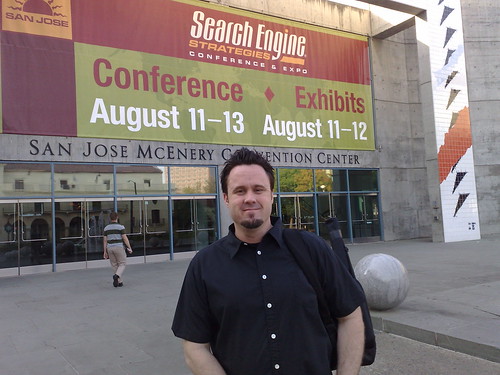
One of the highlights of my week was spending the day with my good friend Mark Robertson, Founder and Publisher of ReelSEO, at the Search Engine Strategies San Jose Conference & Expo in San Jose on Tuesday, August 11th. ReelSEO was a media sponsor and I was part of Mark's ReelSEO press team and helped cover the events of that day.

Search Engine Strategies San Jose 2009 took place from August 10-14 and covered topics from local search to universal search to social media, SEM techniques designed for both beginners and veterans to search. Mark spoke on the SES panel session, "The Next Wave for Online Video," which focused on optimizing online video for search and other strategies. The session was moderated by Andrew Goodman, SES Advisory Board & Principal, Page Zero Media and other panelists included Gregory Markel, Founder/President, Infuse Creative, LLC, Erin Bouchier, Business Lead, Google / YouTube Advertising and David Burch, Director of Marketing, TubeMogul. Mike Sachoff of WebProNews has a nice write up on the session, Tips of Online Video Optimization, in which he summarized the message conveyed by all the panelists to consider all angles. This includes keywords and tags and all the elements surrounding the video and apply the same strategy for ranking high on Google to YouTube which is now the second largest search engine in terms of search queries, according to data presented by Mark.

A few of the highlights we caught were the keynote by Clay Shirky, Author, Here Comes Everybody which explores how organizations and industries are being upended by open networks, collaboration, and user appropriation of content production and dissemination. Shirky is an adjunct professor at New York University in the graduate interactive telecommunications program, where he teaches courses on the interrelationships of social and technological networks, particularly how they shape culture and vice versa.


In this video he recorded with Byron Gordon of SEO-PR, Shirky provides a great afterword to an excellent keynote which he discussed the change in user behavior as a result of the internet. Bringing up HSBC's penalty free checking account fiasco, in which targeted college students, and when the students went on summer vacation, reneged on the deal. Students angered by the unfulfilled promise, used Facebook to protest the changes, as a result of which HSBC reinstated the deal. Shirky also touches upon the Josh Groban non-profit group using social media to further their cause, and the importance of citizen journalism in a Web 2.0 world, improving Journalism even if major newspapers shrink. He dazzled the crowd when he revealed he was wearing The Mountain Men's Three Wolf Moon Short Sleeve Tee, the viral hit and best-seller on Amazon.com.

Other highlights included sessions from the day-long track held in conjunction with SES on Social Media & Video Strategies, which was put on by the teams at ClickZ, YouTube & Google. Industry leader Nate Elliott, Principal Analyst, Forrester Research set the stage with a presentation on Groundswell, based on analysis by Forrester Research Social Media & Video. A few other sessions we caught were What Works: Best Practices / Case Studies for Online Video, which was moderated by Dan Greene, Head of TV Ads, Online Sales & Operations, Google and featured Greg Jarboe, President & Co-Founder, SEO-PR, Chris Sams, Internet Marketing Specialist, ZAGG Inc, Lisa Abourezk, VP, Marketing, ooVoo and Shattuck Groome, Co-owner and Managing Director, Gotham Direct who shared best practices for incorporating video and social media into their marketing efforts.

One of the not-to-miss presentations of the day was by
Michael Fischer, Senior Vice President of Marketing at Coldwell Banker, who presented Coldwell Banker's successful viral marketing campaigns. He showed how their YouTube Channel energized their network by showcasing what video can do for them through geo-targeting and local search.

Look for
more coverage on these sessions along with several on camera interviews that Mark and I conducted that day with Nate Elliott of Forrester, David Burch of TubeMogul and Kristin Kovner of YouTube which will be featured here and on ReelSEO in the coming weeks.

Related ReelSEO posts: